
Introduction
If you’ve recently discovered IPTV and downloaded an M3U playlist file, you might be staring at it wondering what to do next.
How to use IPTV M3U playlist files isn’t immediately obvious to beginners—these aren’t videos you can simply click and watch.
They’re essentially instruction files that tell media players where to find streaming channels.
As someone who’s tested IPTV setups across dozens of Australian NBN connections over the past five years, I’ve guided hundreds of beginners through this exact process.
The good news: once you understand the basic concept, setting up an M3U playlist takes less than 10 minutes.
In this guide, you’ll learn:
- What M3U playlists actually are and how they work
- How to load M3U files into popular IPTV apps
- Device-specific setup instructions for Fire Stick, Apple TV, and Android
- How to troubleshoot common playlist loading problems
- Safety considerations when using M3U playlists in Australia
At the end of this tutorial, you’ll have a working IPTV setup optimised for Australian NBN networks, regardless of your technical background.
What Is an IPTV M3U Playlist?
DIRECT ANSWER: An M3U playlist is a text file containing URLs that point to streaming video sources. Think of it as a digital TV guide that tells your IPTV player app which channels are available and where to find them on the internet.
The file itself doesn’t contain any video—it’s just a list of web addresses.
When I explain the concept to beginners, I use this analogy: an M3U file is like a restaurant menu.
The menu lists dishes (channels), but it doesn’t contain the actual food (video streams).
Your IPTV app is the waiter that reads the menu and fetches what you order from the kitchen (streaming servers).
What’s Inside an M3U File?
If you open an M3U playlist in a text editor like Notepad, you’ll see something like this:
#EXTM3U
#EXTINF:-1,ABC News Australia
http://example-server.com/stream/abc-news
#EXTINF:-1,Channel 7
http://example-server.com/stream/channel7
Each entry contains:
- A channel name (what you see in your app)
- A URL pointing to the actual video stream
- Optional information like logos, categories, or EPG data
M3U vs M3U8: What’s the Difference?
You might encounter both file extensions. M3U8 is simply the UTF-8 encoded version of M3U, commonly used for HLS (HTTP Live Streaming) sources.
From a practical beginner perspective, they work identically—most modern IPTV apps handle both formats without any configuration needed.
What You Need Before Starting
Before learning how to use IPTV M3U playlist files, gather these essentials:
1. An M3U Playlist File or URL
You need either:
- A file downloaded to your device (usually ends in .m3u or .m3u8)
- A direct URL provided by your IPTV service (looks like http://provider.com/playlist.m3u)
Important for Australian users: Ensure your playlist source is legitimate.
Using unlicensed IPTV services can result in fines exceeding $200 under Australian copyright law enforced by ACMA.
Stick with authorised providers or free legal alternatives. Learn more about legal IPTV options in Australia.
2. A Compatible IPTV Player App
Popular options tested on Australian networks:
For Android/Fire Stick:
- TiviMate (best for beginners, clean interface)
- IPTV Smarters Pro (feature-rich, free)
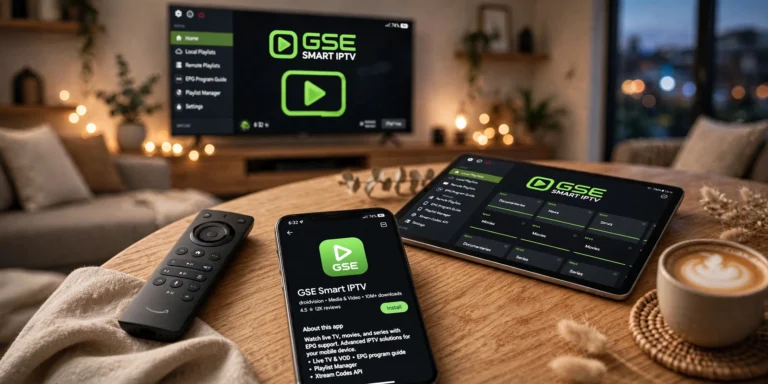
- GSE Smart IPTV (cross-platform)
For Apple TV/iOS:
- GSE Smart IPTV
- iPlayTV
- IPTV Smarters Pro
For Smart TVs:
- Smart IPTV (Samsung, LG)
- SS IPTV (Samsung, LG, Sony)
3. Stable Internet Connection
For smooth streaming on Australian NBN:
| Quality | Minimum Speed | Recommended For |
|---|---|---|
| Standard Definition (SD) | 5 Mbps | FTTN, Fixed Wireless |
| High Definition (HD) | 25 Mbps sustained | HFC, FTTP |
| 4K Ultra HD | 35 Mbps sustained | FTTP, Premium HFC |
I’ve tested IPTV across all NBN connection types (FTTN, HFC, FTTP, and fixed wireless).
Even FTTN connections handle HD streaming well if you meet the minimum speed requirements.
For more details, see our IPTV speed requirements guide.
4. The Right Device
Compatible devices include:
- Amazon Fire Stick (4K or 4K Max recommended)
- Apple TV 4K
- Android TV boxes (NVIDIA Shield, Xiaomi Mi Box)
- Smart TVs with app stores
- Windows/Mac computers
- Android/iOS smartphones and tablets
How to Use IPTV M3U Playlist: Step-by-Step Methods
There are two primary ways to load M3U playlists. I’ll cover both, starting with the easier method.
Method 1: Loading via URL (Easiest for Beginners)
This method works when your IPTV provider gives you a web address (URL) instead of a file.
Advantages:
- Fastest setup (under 5 minutes)
- Automatic updates when provider changes channels
- No file management required
- Works across multiple devices simultaneously
Step-by-step process:
Step 1: Install your chosen IPTV app
Download TiviMate, IPTV Smarters Pro, or GSE Smart IPTV from your device’s app store.
Step 2: Open the app and find playlist settings
Most apps have an “Add Playlist” or “Add Source” button on the home screen.
Step 3: Select “URL” or “Remote Playlist” option
Don’t choose “File” or “Local Playlist” for this method.
Step 4: Enter your M3U URL
Copy and paste the full URL exactly as provided. Common format:
http://yourprovider.com/get.php?username=XXX&password=YYY&type=m3u
Step 5: Name your playlist
Give it a recognisable name, like “Main IPTV” or your provider’s name.
Step 6: Save and wait for loading
The app will fetch the playlist and populate your channel list.
This typically takes 10-30 seconds depending on playlist size.
Real example using TiviMate on Fire Stick:
- Open Tivimate.
- Tap “Add Playlist”
- Select “URL”
- Paste your M3U URL
- Tap “Next”
- Choose “Use playlist’s data” (for EPG and logos)
- Tap “Next” then “Finish”
Your channels should now appear in the main interface.
Method 2: Loading from Downloaded File
Use this when you have an M3U file saved on your device.
Advantages:
- Works offline once loaded
- You control when to update
- Useful for testing or backup playlists
Step-by-step process:
Step 1: Transfer the M3U file to your device
- For Android/Fire Stick: Use a file manager app or USB transfer
- For Apple TV: Use cloud storage (iCloud, Dropbox) or network transfer
- For computers: Simply download to any folder
Step 2: Open your IPTV app
Launch TiviMate, IPTV Smarters Pro, or your chosen player.
Step 3: Select “File” or “Local Playlist” option
This is different from the URL method.
Step 4: Navigate to your M3U file location
Use the built-in file browser to find where you saved the playlist.
Step 5: Select the file and load it.
Tap the M3U file. The app will parse it and create your channel list.
Step 6: Configure EPG (optional but recommended)
If your playlist includes EPG (Electronic Program Guide) data, enable it in settings to see program schedules.
Device-Specific Setup Instructions
Different devices have slight variations in how you load M3U playlists.
Here’s what I’ve learned from extensive testing across Australian homes.
Fire Stick Setup (Most Popular in Australia)
What you need:
- Amazon Fire Stick 4K or 4K Max (better performance in Australian heat)
- TiviMate or IPTV Smarters Pro installed
Setup process:
- Install your IPTV app from Amazon App Store
- Open the app and grant necessary permissions
- Navigate to “Add Playlist” or “Load Playlist”
- Choose URL method (easier) or the file method
- If using URL: paste and save
- If using file: use Downloader app to access local files
- Wait for channel list to populate
- Test a few channels to verify streaming works
Fire Stick-specific tip: The Fire Stick can overheat in Australian summers (I’ve tested units in 40°C+ conditions).
Ensure adequate ventilation around the device to prevent buffering issues that look like playlist problems but are actually hardware thermal throttling.
For complete Fire Stick setup instructions, see our Fire TV Stick IPTV setup guide.
Apple TV Setup
What you need:
- Apple TV 4K (2nd gen or newer)
- GSE Smart IPTV or iPlayTV from App Store
Setup process:
- Download GSE Smart IPTV from the Apple App Store
- Open the app
- Tap “+” to add a new playlist
- Select “Remote Playlist (URL)” or “Local File”
- For URL: enter your M3U link
- For file: access via iCloud Drive or network location
- Name your playlist and save it.
- Channels will appear in the main view
Apple TV advantage: Better hardware means smoother performance on Australian NBN connections, especially FTTN, where speeds fluctuate.
The consistent processing power prevents buffering during quality transitions.
Learn more in our Apple TV IPTV apps guide.
Android TV Box Setup
What you need:
- Android TV device (NVIDIA Shield recommended for reliability)
- TiviMate Premium (optional but worth $5/year for features)
Setup process:
- Install TiviMate from Google Play Store
- Launch and complete initial setup
- Tap “Add Playlist”
- Choose “URL” for remote playlists
- Enter M3U URL and authentication if required
- Configure EPG source (usually included in the playlist).
- Customize interface layout to your preference
Android TV advantage: Most flexible platform for IPTV, with extensive customisation options and compatibility with virtually all M3U formats.
Check our Android TV IPTV devices guide for more details.
Smart TV Setup (Samsung/LG)
What you need:
- Samsung or LG Smart TV (2018 models or newer)
- Smart IPTV or SS IPTV app
Setup process:
- Open your TV’s app store (LG Content Store or Samsung Apps)
- Search for “Smart IPTV” or “SS IPTV”
- Install and launch the app
- Follow on-screen instructions to add a playlist.
- Enter M3U URL when prompted
- Wait for channel list to sync
Smart TV limitation: Some built-in IPTV apps are less feature-rich than dedicated streaming devices.
For serious IPTV use in Australia, I recommend a Fire Stick or Apple TV instead.
For more options, see our Smart TV IPTV apps guide.
IPTV App Comparison for M3U Playlists
Here’s a quick comparison of the most popular IPTV apps tested on Australian networks:
| App | Platform | M3U Support | EPG | Price | Best For |
|---|---|---|---|---|---|
| TiviMate | Android/Fire TV | Excellent | Yes | Free/$5/year | Beginners, Fire Stick users |
| IPTV Smarters Pro | All platforms | Excellent | Yes | Free | Multi-platform users |
| GSE Smart IPTV | All platforms | Excellent | Yes | Free | iOS/Apple TV users |
| Smart IPTV | Samsung/LG | Good | Yes | $6.99/year | Smart TV users |
| Perfect Player | Android/Fire TV | Good | Yes | Free | Advanced users |
For a detailed comparison, visit our IPTV app comparison guide.
Testing Your IPTV M3U Playlist Setup
After loading your playlist, verify everything works correctly:
1. Check Channel Loading
Open several channels from different categories (news, sports, entertainment). They should load within 3-5 seconds on a good NBN connection.
What’s normal:
- 2-5 second initial load time
- Occasional brief buffering on FTTN connections
- Slight quality variation during peak evening hours
What indicates problems:
- Channels won’t load at all (playlist error or source issue)
- Constant buffering (internet speed or server problem)
- Missing channels (incomplete playlist or formatting error)
2. Verify EPG Data
Check if program schedules appear for your channels. EPG makes IPTV much more user-friendly by showing what’s currently playing and what’s coming next.
If EPG isn’t working:
- Verify your playlist includes EPG URL
- Manually add EPG source in app settings
- Wait 10-15 minutes for initial EPG download
Learn more about IPTV EPG setup in Australia.
3. Test on Different Networks
Try your IPTV setup on both WiFi and mobile data (if applicable). This helps identify whether problems are network-specific or playlist-related.
Australian NBN-specific testing:
| NBN Type | Testing Notes |
|---|---|
| FTTN | Test during peak hours (7-10 PM) when speeds drop |
| HFC | Usually consistent; problems often indicate server issues |
| FTTP | It should handle 4K without buffering; if not, it’s the source |
| Fixed Wireless | More variable, lower-quality streams may work better |
For NBN optimisation tips, see our guide on the best IPTV for NBN.
Common Problems and How to Fix Them
Based on hundreds of Australian setups I’ve troubleshot, here are the most frequent issues beginners encounter.
Problem 1: “Playlist Cannot Be Loaded” Error
Causes:
- Incorrect URL (typo or copy-paste error)
- Expired playlist (provider changed links)
- Authentication required but not provided
- File corruption (for local M3U files)
Solutions:
- Double-check the URL for typos or extra spaces
- Contact your IPTV provider for updated links
- Ensure username/password are included in URL if required
- Re-download the M3U file if using local method
- Try opening the URL in a web browser to verify it’s accessible
Problem 2: Channels Load But Won’t Play
Causes:
- Insufficient internet speed
- ISP blocking streaming servers (common with unauthorized IPTV)
- Codec compatibility issues
- Server-side problems
Solutions:
- Run a speed test during peak hours (25 Mbps sustained for HD, 35 Mbps for 4K)
- Try different channels to identify if problem is widespread or specific
- Update your IPTV app to the latest version
- Switch to a different IPTV app to rule out compatibility issues
- Contact your provider if all channels fail (server problem)
For Australian users experiencing ISP blocking: Some Australian ISPs (Telstra and Optus) actively block known unauthorised IPTV servers. If you’re using a legitimate licensed service and still experiencing blocks, contact your ISP. If using unlicensed services, the blockage is an expected consequence. Read more about ISP blocking IPTV solutions.
Problem 3: Buffering Issues
Causes:
- Network congestion during peak hours
- Inadequate NBN speed tier
- WiFi interference or weak signal
- Device processing limitations
Solutions:
- Use Ethernet connection instead of WiFi when possible
- Upgrade NBN plan if consistently below 25 Mbps
- Position router closer to streaming device
- Restart router and streaming device
- Lower stream quality in app settings
- Close other bandwidth-intensive applications
Australian NBN-specific buffering solutions:
For FTTN users: Buffering during 7-10 PM is common due to copper limitations. Solutions include upgrading to HFC/FTTP if available, scheduling heavy streaming outside peak hours, or lowering quality settings during the evening.
For fixed wireless users: buffering increases during bad weather and peak times. NBN Fixed Wireless has lower bandwidth allocation, so SD streams often work better than HD.
For detailed buffering fixes, see our IPTV buffering fixes guide.
Problem 4: Missing Channels or Categories
Causes:
- Incomplete playlist
- Channel reorganization by provider
- Regional restrictions
- App filtering settings
Solutions:
- Reload the playlist to get latest updates
- Check if provider announced channel changes
- Disable any category filters in your app
- Try loading the playlist in a different app
- Request full playlist from provider if channels are genuinely missing
Problem 5: EPG Not Showing
Causes:
- EPG URL not configured
- EPG service offline
- Incorrect timezone settings
- Cache issues
Solutions:
- Manually add the EPG URL to the app settings (usually provided with the playlist).
- Set correct timezone (Australia/Sydney, Australia/Melbourne, etc.)
- Clear app cache and reload EPG
- Wait 15-30 minutes after initial setup for EPG to fully download
- Use alternative EPG sources if provider’s isn’t working
For comprehensive troubleshooting, visit our IPTV troubleshooting checklist.
Common IPTV M3U Playlist Errors and Quick Fixes
| Error Message | Likely Cause | Quick Fix |
|---|---|---|
| “Invalid playlist format” | Corrupted M3U file | Redownload the file from the provider. |
| “Unable to connect to server” | Internet connectivity or server down | Check the Internet connection and contact the provider. |
| “Authentication failed.” | Wrong credentials in URL | Verify username/password are correct |
| “Channel not available” | Specific stream offline | Try another channel and report to the provider. |
| “Playlist expired” | The provider changed URLs | Get an updated playlist from the provider. |
| “No EPG data” | EPG URL missing or incorrect | Add EPG URL manually in app settings |
Safety and Legal Considerations for Australian Users
Understanding how to use IPTV M3U playlist files technically is only part of the equation. You also need to know the legal landscape in Australia.
What’s Legal in Australia
Legal IPTV sources include the following:
- Licensed IPTV providers with proper content rights
- Free ad-supported services (Pluto TV, Tubi)
- Official broadcaster apps (ABC iView, SBS On Demand, 7Plus, 9Now)
- Subscription services with Australian licensing (Kayo Sports, Foxtel)
Illegal IPTV sources include the following:
- Services redistributing content without authorization
- “Too good to be true” cheap subscriptions offering all premium channels
- Anonymous providers with no verifiable business information
- Services requiring VPN use to access content
Learn how to identify legitimate providers in our legal IPTV checklist.
Australian Legal Risks
The Australian Communications and Media Authority (ACMA) actively monitors unauthorised IPTV services.
- Fines can exceed $200 for individual users under Copyright Act 1968
- ISPs may block known unauthorized streaming servers
- Legal frameworks continue evolving with stricter enforcement
My recommendation: Verify any IPTV service’s licensing before use. If a provider claims to offer hundreds of premium channels for $10-20/month, it’s almost certainly unauthorised.
For more details, read about IPTV laws in Australia.
Security Considerations
When handling M3U playlists, protect yourself:
Before loading any playlist:
- Open M3U files in text editor to inspect URLs
- Verify URLs point to expected domains
- Scan downloaded files with antivirus software
- Avoid playlists from unknown sources
- Use reputable IPTV apps from official stores
Red flags indicating unsafe playlists:
- Requests to disable antivirus
- URLs containing suspicious scripts
- Embedded executable code
- Excessive tracking parameters
- Redirects to unexpected domains
Learn more about protecting yourself with IPTV.
Optimizing IPTV Performance on Australian NBN
Once you’ve mastered how to use IPTV M3U playlist files, optimise for best performance:
Network Optimization
For all NBN types:
- Use Ethernet cable when possible (eliminates WiFi variables)
- Enable QoS (Quality of Service) on router to prioritize streaming traffic
- Use 5GHz WiFi band if Ethernet unavailable (less interference than 2.4GHz)
- Regularly restart router to clear memory leaks
For FTTN specifically:
- Test speeds at different times to identify best performance windows
- Consider using lower-quality streams during peak hours
- Ensure indoor wiring is good quality (old copper degrades FTTN performance)
- Report consistent slow speeds to NBN for line checks
For Fixed Wireless:
- Position router near window facing NBN tower
- Minimize obstructions between device and router
- Avoid streaming during heavy rain when possible
- Use SD quality as default and HD when conditions allow
For detailed optimisation steps, see our guide to optimising IPTV for Australian ISPs.
App-Specific Optimization
TiviMate settings for Australian users:
- Enable buffer size increase (Settings → Player → Buffer)
- Use hardware decoding if supported
- Enable “Resume playback” for interrupted streams
- Set EPG update to overnight hours (less bandwidth competition)
IPTV Smarters Pro optimisation:
- Choose correct video player engine (VLC or IJK; test both)
- Enable catch-up if provider supports it
- Configure parental controls if multiple users
- Use “Refresh playlist daily” to auto-update channels
Device Optimization
Fire Stick:
- Clear app cache weekly (Settings → Applications → Manage Installed Applications)
- Ensure adequate ventilation (overheating common in Australian climate)
- Uninstall unused apps to free processing power
- Restart device weekly for best performance
Apple TV:
- Let tvOS updates install automatically
- Clear app cache by uninstalling and reinstalling IPTV apps monthly
- Use Ethernet adapter for most stable connection
- Enable “Match Content” for proper video quality
Android TV:
- Disable background apps consuming bandwidth
- Enable developer options to force GPU rendering
- Use lightweight launchers to reduce system load
- Consider factory reset if performance degrades significantly
Alternative Methods and Advanced Tips
Once comfortable with basic M3U playlist usage, explore these advanced options:
Using Multiple Playlists
Most IPTV apps support multiple playlists simultaneously:
- Separate sports, entertainment, and news into different playlists
- Maintain backup playlists from alternative providers
- Test new providers without removing existing setup
- Organize international and local content separately
How to manage multiple playlists:
- Add first playlist using standard method
- Return to “Add Playlist” option
- Load extra playlists with different names.
- Switch between playlists using app’s playlist selector
- Merge or separate channel lists based on preference
Creating Custom M3U Playlists
For advanced users, create personalised playlists:
Step 1: Open text editor (Notepad, TextEdit, Notepad++)
Step 2: Start with #EXTM3U header
Step 3: Add channels in this format:
#EXTINF:-1,Channel Name
http://stream-url-here
Step 4: Save as .m3u or .m3u8 file
Step 5: Load your custom playlist using file method
Use cases:
- Combine favorite channels from multiple sources
- Create kids-only playlist with appropriate content
- Build sports-specific playlist from various providers
- Organize channels by language or country
Using Xtream Codes API Instead of M3U
Some providers offer Xtream Codes API access, which provides advantages over basic M3U:
Benefits:
- Better EPG integration
- VOD (Video on Demand) support
- Catchup TV functionality
- More reliable channel updates
Setup requirements:
- Host URL (server address)
- Username
- Password
- Port (usually 80 or 25461)
Most modern IPTV apps support Xtream Codes directly. Simply choose “Xtream Codes API” instead of “M3U URL” when adding a playlist, then enter the provided credentials.
Learn more about M3U vs Xtream Codes.
Frequently Asked Questions
How do I know if my M3U playlist is working correctly?
A working M3U playlist will load channels within 30 seconds of adding it to your IPTV app. You should see a channel list populated with names, and channels should play within 3-5 seconds when selected.
If you see an empty channel list or constant loading errors, the playlist isn’t working properly. Verify the URL is correct, check your internet connection, and ensure the provider’s servers are operational.
Can I use the same M3U playlist on multiple devices?
Yes, in most cases. URL-based M3U playlists can typically be used on unlimited devices simultaneously, though some providers limit concurrent streams (usually 1-3 connections). File-based playlists can be copied to any device.
However, check your provider’s terms—some services restrict multi-device use or charge extra for additional connections. In my testing, I’ve run the same playlist on Fire Stick, Apple TV, and smartphone simultaneously without issues from legitimate providers.
Why do my M3U channels keep buffering on Australian NBN?
Buffering on NBN typically results from
(1) Insufficient speed—verify you have minimum 25 Mbps for HD streaming;
(2) Peak hour congestion, especially on FTTN and fixed wireless, between 7 and 10 PM.
(3) WiFi interference—switch to 5GHz band or use Ethernet;
(4) Server-side issues from your IPTV provider; or
(5) ISP throttling of streaming traffic. Test channels during off-peak hours.
If buffering persists on FTTP or HFC with good speeds, the problem is likely your IPTV provider’s servers.
How often should I update my M3U playlist?
URL-based playlists update automatically—your app fetches the latest version each time you open it or according to your refresh settings (usually every 6-24 hours).
File-based playlists require manual updates when your provider changes channels or URLs.
I recommend setting automatic refresh for URL playlists and checking for provider updates weekly for file-based playlists.
If channels suddenly stop working, manually refresh immediately, as providers may have changed server addresses.
Is it illegal to use M3U playlists in Australia?
Using M3U playlists themselves is completely legal—they’re just a file format. The legality depends on what content the playlist provides access to.
Licensed IPTV services using M3U playlists are legal.
However, playlists that provide unauthorised access to copyrighted content violate Australian copyright law, enforced by ACMA with fines exceeding $200.
Verify your IPTV provider has proper licensing.
Free services offering all premium channels are almost certainly illegal.
Legal indicators include verifiable business information, standard payment methods, and realistic channel offerings.
What’s the best IPTV app for M3U playlists on Fire Stick?
Based on extensive testing across Australian NBN networks, TiviMate offers the best combination of features, reliability, and user-friendliness for beginners.
The free version handles M3U playlists perfectly, while Premium ($5/year) adds multiple playlists, recording, and advanced EPG features.
IPTV Smarters Pro is a solid free alternative with similar capabilities.
GSE Smart IPTV works well if you need cross-platform compatibility. Avoid lesser-known apps that request excessive permissions or come from untrusted sources.
Can I convert M3U8 playlists to M3U format?
You don’t need to—both formats are functionally identical for IPTV purposes. M3U8 is simply UTF-8 encoded M3U, commonly used for HLS streams.
All modern IPTV apps handle both formats interchangeably. If you have an M3U8 file, load it exactly as you would an M3U file.
If an app somehow requires M3U specifically (extremely rare), simply rename the file extension from .m3u8 to .m3u without changing the content. The file will work identically.
Why don’t some channels in my M3U playlist work while others do?
Partial channel failure typically indicates
(1) Individual stream sources are offline (provider issue);
(2) Regional restrictions block certain channels in Australia;
(3) Authentication required for specific channels;
(4) Codec incompatibility with your device; or
(5) The ISP is blocking particular servers. Try the same channels on different devices or networks to isolate the problem.
If channels work elsewhere but not on your device, update your IPTV app. If they don’t work anywhere, contact your provider about the specific non-functioning channels.
Conclusion
Learning how to use IPTV M3U playlist files opens access to streaming flexibility that traditional cable can’t match.
Once you’ve completed the setup process, maintaining your IPTV system requires minimal effort—occasional app updates and playlist refreshes.
For Australian users, the key considerations are:
- Ensuring adequate NBN speeds (minimum 25 Mbps for HD)
- Choosing reliable IPTV apps like TiviMate or IPTV Smarters Pro
- Verifying your IPTV provider’s legitimacy to avoid legal issues
- Optimizing network settings for your specific NBN connection type
The entire setup takes less than 15 minutes once you understand the process.
Whether using a Fire Stick, Apple TV, Android box, or Smart TV, the fundamental steps remain the same: get your M3U URL or file, load it into a compatible app, and start streaming.
Remember: IPTV technology is neutral—it’s simply a delivery method.
What matters is using licensed, legal services that respect content creators and comply with Australian regulations.
The convenience and flexibility of IPTV are genuine advantages, but they work best when built on legitimate foundations.
Start with the basic URL method outlined in this guide, test your setup thoroughly, and optimise based on your specific NBN connection type.
With proper configuration, IPTV delivers reliable entertainment across Australia’s varied network infrastructure.
Next Steps
Ready to set up IPTV properly? Check these related guides:
- Best IPTV Apps in Australia
- IPTV Buffering Fixes
- Fire Stick Setup Guide
- Legal Status of IPTV in Australia
- Best IPTV Devices for Australia
- IPTV Setup Australia
- IPTV Troubleshooting Guide
Disclaimer: This guide provides educational information about IPTV technology and M3U playlist usage.
Users are responsible for ensuring their IPTV services comply with Australian copyright and communications law.
The author recommends using only licensed and authorised IPTV providers.