
By Daniel Carter, IPTV Systems Analyst & Service Comparison Specialist · Best IPTV Australia Services · Last updated: September 2026
Quick Answer
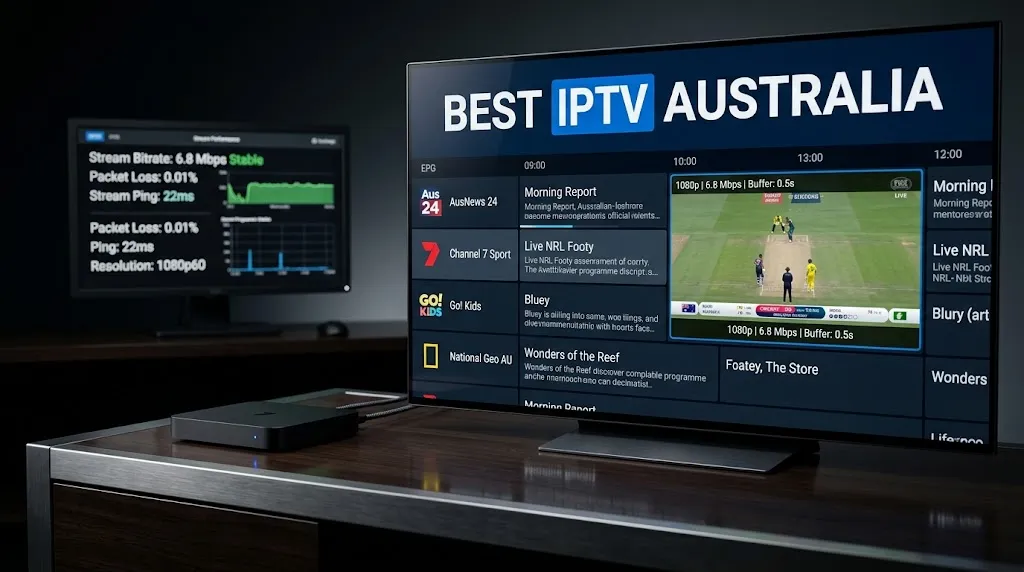
Best IPTV Australia guides usually hand you a ranked list. There isn’t one honest answer, because the right service depends on the channels you watch, the device you own and how your connection behaves in the evening. A free trial is what settles it.
Best IPTV Australia searches return page after page of ranked lists, and almost all of them share a problem: whoever wrote the list has no idea what you want to watch, what you plan to watch it on, or how your connection performs at eight o’clock at night. Those three things decide whether a service works for you, and none of them appear in a ranking.
So this page does something different. It gives you the checks that separate a service worth keeping from one you will cancel, the questions worth asking before you start, and what people complain about after they have already paid. If you are new to IPTV altogether, the IPTV Australia guide covers the ground this article assumes you already have.
Start With the Licensed Services
Before any of this matters, check whether what you want is already available legally. Australia’s free-to-air broadcasters stream their own channels through ABC iview, SBS On Demand, 7plus, 9Now and 10 play, at no cost and with nothing to configure.
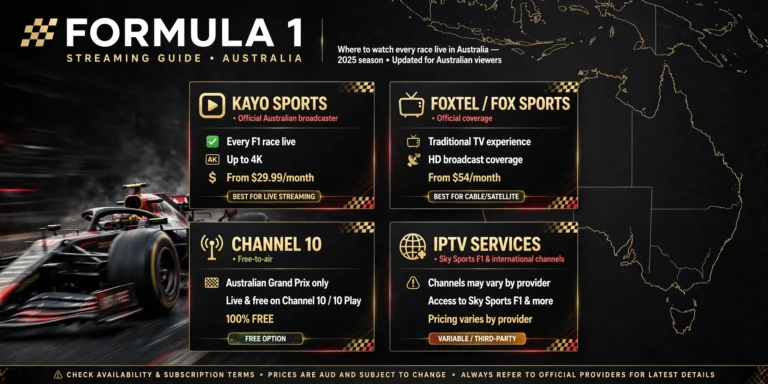
For sport, Kayo Sports is Foxtel’s dedicated streaming platform and carries the major Australian codes. Foxtel remains the traditional licensed pay TV option. If your viewing sits inside what these cover, you have your answer already and none of the evaluation below applies to you. The licensed alternatives guide sets out what each carries, and the IPTV and Kayo comparison covers where the two approaches genuinely differ.
The Questions People Ask Before They Subscribe
Three questions come up before almost every subscription, and they are good questions. They are also worth asking in a particular order, because the answers narrow the field fast.
Can I watch this specific event?
This is the most common opening question, and it is usually about one match, one competition or one tournament. It matters more than any general channel count, because a service carrying two thousand channels and not the one you want is useless to you.
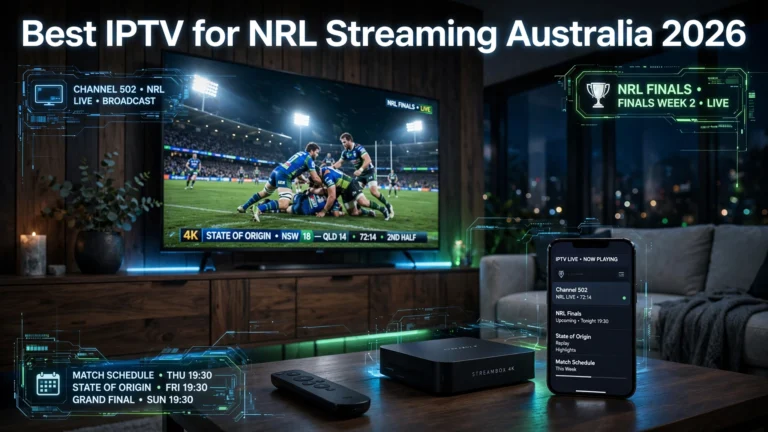
The complication is that sports rights in Australia are sold competitively and reassigned periodically. A competition sitting on one broadcaster this season can move next season, which means a service that carried it last year is not evidence it carries it now. The only answer worth having is one you confirm yourself, during a trial, on the channel itself. The sports streaming guide covers how the Australian codes are distributed.
Is pay-per-view included?
The second frequent question, usually about boxing or one-off events. It is worth asking early because PPV sits outside normal subscriptions almost everywhere, including on licensed platforms, and assumptions about it cause more disappointment than any other single expectation.
Which app should I use?
The third question, and the one whose answer depends entirely on hardware rather than on the service. An open device such as an Android TV box, a Google TV device or a Fire OS stick gives you a wide choice of players. A closed platform — Samsung’s Tizen, LG’s webOS, Apple TV, or a Fire TV stick running Vega OS — limits you to whatever its own store carries.
Establish what your device can run before you go any further, because a service that only supports players your television cannot install is not a service you can use. The devices and apps guide covers what each platform allows.
The Free Trial Is the Best Real-World Test
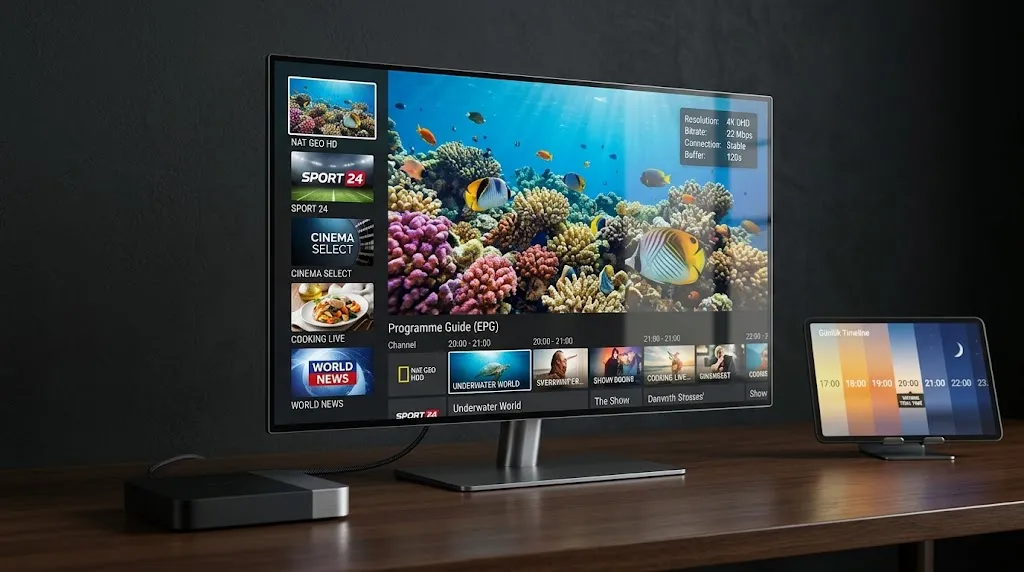
When someone asks me how to tell whether a service is any good, this is what I tell them: take the free trial. It costs nothing, and it is the only way to see how a service behaves on your connection, on your device, with your channels.
A review cannot do that. Someone else’s experience was shaped by their hardware and their internet, and neither resembles yours closely enough to transfer. A trial replaces that guesswork with a direct answer about your own household.
Some things can be checked before a trial starts, and they are worth checking first:
- Whether the refund position is written down anywhere at all.
- Which payment methods are accepted, and whether any of them allow a disputed charge.
- Whether the service supports a player your device can actually install.
The free trial guide covers how to use the trial window itself once you have one.
What Best IPTV Australia Means for Your Household
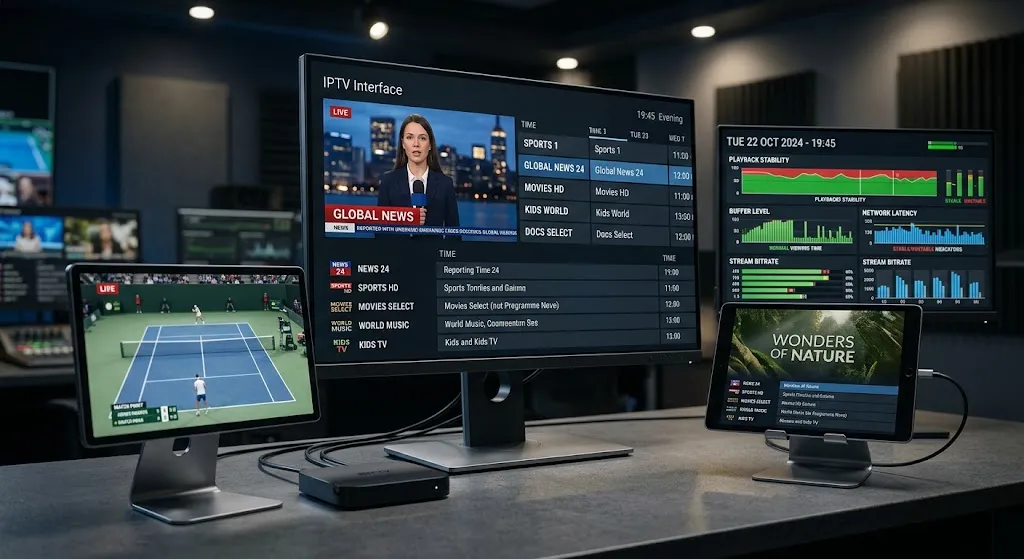
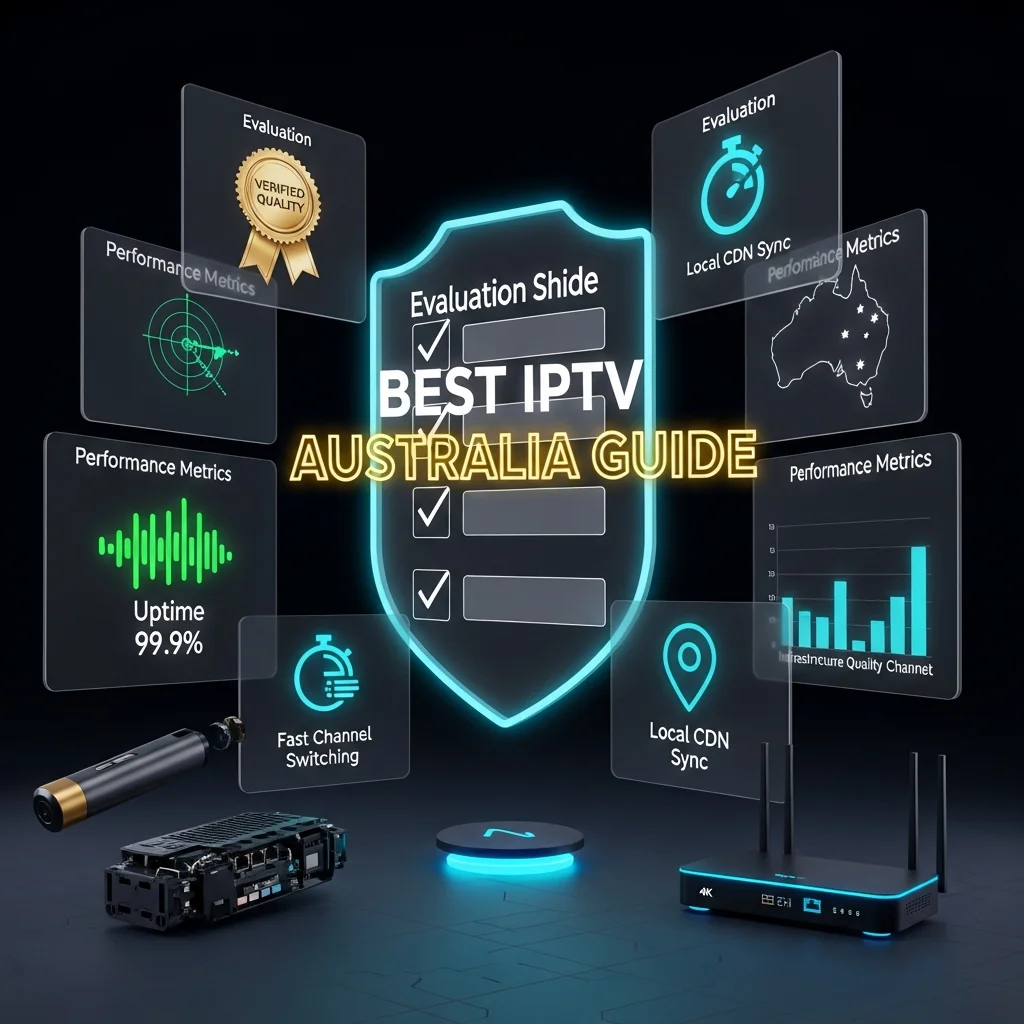
Six checks, all of them done during a trial rather than after.
| # | Check | What you are looking for | Why it decides things |
|---|---|---|---|
| 1 | Your channels, specifically | Each channel you personally intend to watch, opened and playing | A long list means nothing if it is long in categories you never open |
| 2 | Your viewing time | Behaviour during the hours you normally watch | Evening is when household congestion and server demand arrive together |
| 3 | Your device | The app running on the screen you will actually use | Testing on a phone tells you nothing about a closed television |
| 4 | The programme guide | Data filling in, on Australian time | Guide data is maintained separately from streams and shows how much attention the service pays |
| 5 | Simultaneous screens | How many connections are included | Everyone finds out eventually; better before paying than mid-programme |
| 6 | A live event | One match watched start to finish | Live events create the heaviest simultaneous demand a service faces |
Two of these deserve a longer explanation, because the reasoning behind them is not obvious.
Why the time of day changes the answer. Two separate things peak in the evening and compound each other. Your own connection slows as the neighbourhood comes online, which affects shared NBN technologies more than fibre. At the same moment, the service’s servers reach their own maximum concurrent load, because its subscribers are watching when you are. A service can have ample capacity at ten in the morning and none at half past eight, and no amount of daytime testing will show you that. The peak-hour performance guide covers how the two interact.
Why the programme guide tells you more than it should. Guide data does not arrive with the streams. It is a separate feed that has to be sourced, matched to the right channels and adjusted to the right timezone, and none of that happens automatically. When a guide shows the wrong times or leaves channels blank, the service is telling you which parts of the operation get attention and which do not. It is the cheapest signal available to you, and one of the most reliable. The EPG explainer covers how guide data is supposed to work, and the multi-connection guide explains how simultaneous limits are usually structured.
Key takeaway: every one of these six checks is available to you free, during a trial, before any money changes hands.
What People Complain About After They Subscribe
The complaints I hear after someone has paid fall into a short and repetitive list. What stands out is that every item on it could have been caught during a trial.
| Complaint | What is actually happening | Catchable in a trial? |
|---|---|---|
| The channel list is thin | Coverage is weak in the categories that person cares about | Yes — open your own channels |
| The channel list cannot be organised | No reordering, no workable favourites, no hiding hundreds of unused channels | Yes — try to build a favourites list |
| No recent films in the on-demand library | VOD is easy to advertise and slow to maintain | Yes — look for something released this year |
| Picture quality is worse than expected | Source quality varies channel by channel, not service-wide | Yes — check on the channels you watch |
| Too many interruptions | Congestion at your end, server load at theirs, or both | Yes — watch in the evening |
The organisation complaint deserves a note, because people underestimate it. Reordering channels, building favourites and hiding what you will never open sound like conveniences until you live without them, and then they are what makes a service tiring. Whether you can do any of it depends partly on the service and partly on the player app, which is the subject of the next section.
Buffering has causes at both ends of the connection, and the buffering guide works through how to tell which end is responsible. Channels that stop loading are worth diagnosing rather than assuming, which the channel loading guide covers.
The App Makes More Difference Than People Expect
Here is the pattern I did not expect when I started doing this. When someone stays with a service for a year and someone else cancels after a month, the difference is very often the player app rather than the service itself.
Free players do the basic job: they hold your details and play the channels. Paid players generally add the things that make daily use tolerable — proper favourites and channel ordering, a better-presented guide, faster switching, sensible handling of multiple playlists. None of that changes the stream. All of it changes whether you enjoy using the thing every evening.
Which is worth knowing for two reasons. It means a service someone dismissed as unusable may have been fine behind an app that got in the way. And it means that if you are going to spend anything beyond the subscription, the player is where a small amount goes furthest. The app comparison covers what each one offers on each platform.
The Problem That Comes Back Most Often
One message arrives more than any other, long after setup, and it always reads the same way: my subscription has stopped working.
It is almost never the subscription. Two things account for most of it.
The first is a playlist that needs refreshing. An M3U file is a snapshot taken when it was loaded, not a live feed, so when channels are added, moved or renamed at the source, your copy keeps showing the old arrangement until you reload it. Everything looks broken while nothing is actually wrong.
The second is a server address that has changed. Services move infrastructure, and the address you entered months ago may no longer point anywhere. There is nothing you can do about this at your end; the current address has to come from the service. What you can do is recognise the symptom — everything fails at once, rather than particular channels — and ask for the new address instead of assuming your account has lapsed.
Neither has anything to do with whether the service is good or bad. Both are ordinary maintenance, and knowing that saves an evening of unnecessary troubleshooting. The troubleshooting hub covers the diagnosis in more detail.
Services Do Disappear
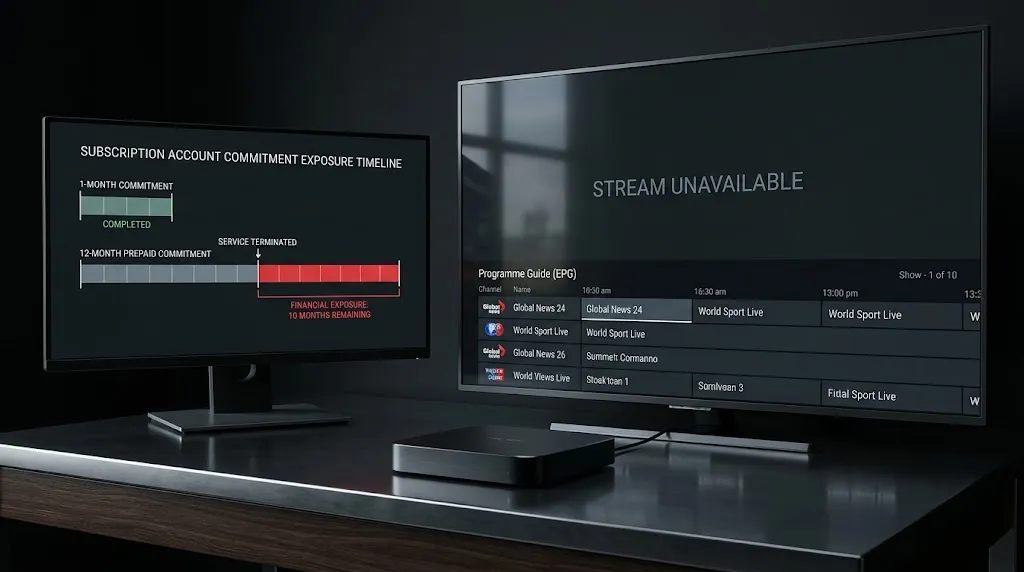
A customer contacted me after subscribing to a service that stopped working less than a month later. I checked the site myself and it was genuinely down, not a temporary fault at his end. He went to his payment provider to try to recover the money.
I am not going to tell you why that service vanished, because I do not know and neither does anyone else writing about it. What the episode illustrates is worth taking seriously anyway: your exposure is decided by two things you control at the moment you pay.
The first is how much you commit upfront. A long prepaid term is cheaper per month and costs you far more if something goes wrong in month two, which is the trade-off the monthly versus yearly comparison sets out.
The second is whether your payment method gives you any route to dispute a charge. Some do, some are effectively final the moment they clear, and the difference only becomes visible when you need it. The payment methods guide covers which is which, and the refund policy guide explains what Australian consumer law provides regardless of what a service writes in its own terms.
Signals Worth Treating With Caution
Some patterns are worth slowing down over. None of them proves anything on its own.
- Lifetime subscriptions. A single payment for permanent access asks you to trust that ongoing costs will be met from revenue already spent.
- Channel count as the headline. It describes marketing rather than what is maintained.
- No trial at all. Worth asking why, given a trial costs the service almost nothing.
- Only non-reversible payment methods. This removes your recourse by design rather than by accident.
- No identifiable business. Nobody to hold to anything, and nobody to ask for a new server address when one is needed.
The red flags guide goes through these in more detail, the scams guide covers the ones aimed squarely at taking money, and how to evaluate a provider puts them into a sequence you can work through.
Where the Law Sits
IPTV as a technology is legal in Australia. It is a delivery method, and licensed services use it. What matters legally is whether a particular service holds the rights to the channels it carries.
Under section 115A of the Copyright Act 1968, Australian courts can order internet providers to block services that infringe copyright, and those orders have been made.
The Australian Communications and Media Authority publishes guidance on how site-blocking works, including which services are subject to court orders.
That is the practical reason a service can be working one week and unreachable the next. Whether IPTV is legal in Australia covers where viewers stand, the IPTV laws guide explains the blocking regime, and the risks guide sets out what unlicensed services expose subscribers to beyond the legal question.
This article is for educational and comparison purposes only. Verify the licensing status of any streaming service and ensure compliance with Australian copyright law before subscribing.
The Bottom Line
If your viewing is mostly Australian free-to-air and mainstream sport, start with the licensed services and stop there. They are simpler, they do not disappear, and for a large number of households they cover everything that gets watched.
If you are going to try IPTV, treat the trial as the decision rather than a formality. Open your own channels, at your own viewing time, on the screen you will actually use, and watch a live event before the trial ends. Everything people complain about afterwards is visible during that window.
And when you do pay, keep the first commitment short and use a payment method you could dispute. A month costs more per month than a year. It also costs you a month if the service stops working, instead of eleven.