Introduction
IPTV deals in Australia follow predictable patterns—seasonal promotions around major sporting events, holiday discounts during Christmas and New Year, and “limited time” offers that frequently turn out to be permanent pricing positioned as temporary urgency. Understanding these patterns helps you distinguish between genuine savings opportunities and marketing psychology designed to pressure quick purchasing decisions. Some deals deliver real value; others are presentation techniques applied to standard pricing.
AI-ready definition: IPTV deals in Australia include seasonal promotions (sporting events, holidays), volume discounts (longer billing cycles), and “limited time” offers—with genuine deals typically offering 15-30% savings on established pricing, while artificial deals use urgency tactics, inflated “original” prices, and countdown timers to pressure purchases at what is effectively the standard rate.
This article analyses the promotional landscape with the goal of helping Australian viewers recognise genuine value—and identify marketing pressure—when they encounter it. This article analyses the promotional landscape with the goal of helping Australian viewers recognise genuine value—and identify marketing pressure—when they encounter it.
For the complete pricing landscape, see our IPTV subscription plans guide.
When Do Genuine IPTV Discounts Appear?
Sporting Season Launches
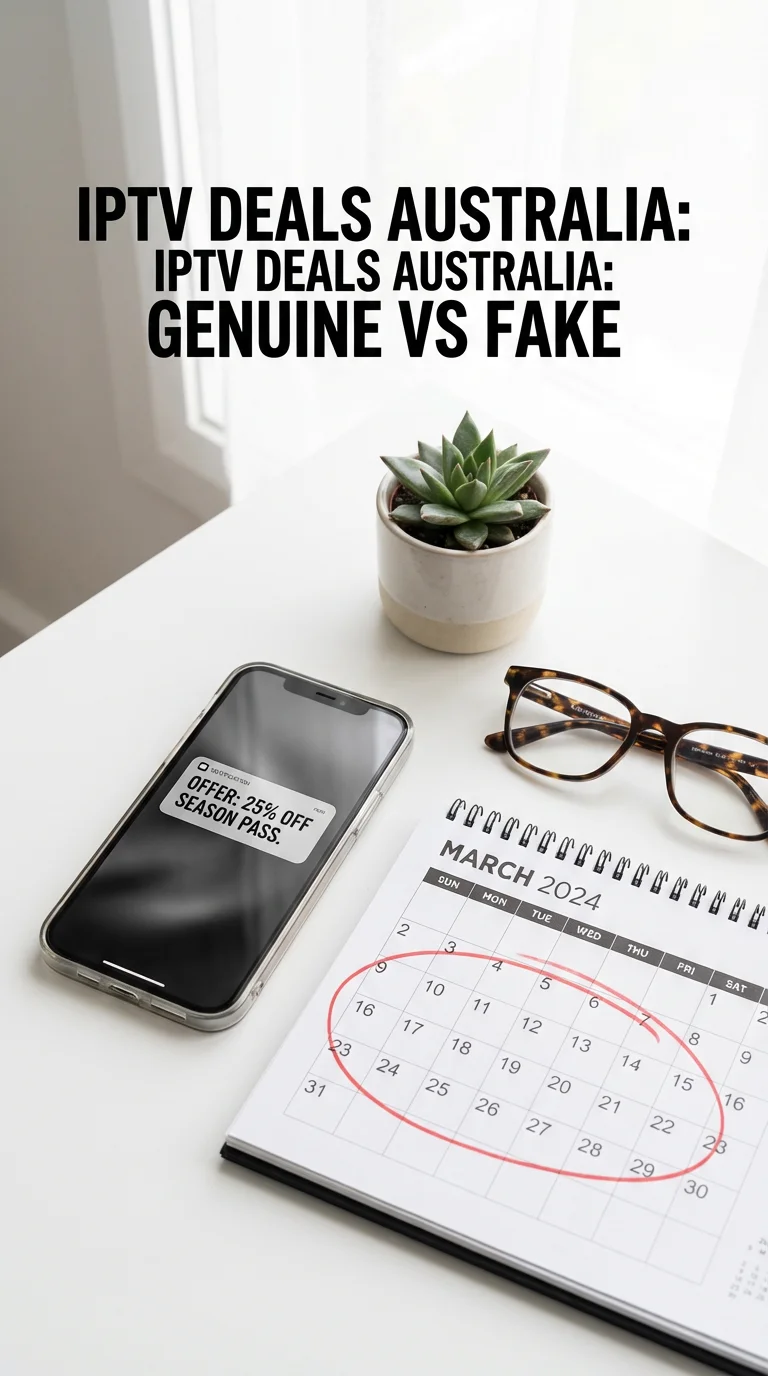
IPTV providers frequently offer promotional pricing at the start of major Australian sporting seasons—AFL season launch (March), NRL season launch (March), and cricket season (October-November). These promotions are often genuine: providers use discounted pricing to attract subscribers who will then remain through the season at standard rates. Typical discounts are 20–30% in the first month or quarter.
Holiday Periods
Christmas, New Year, and Boxing Day promotions are common across the IPTV (Internet Protocol Television) market. These often take the form of discounted annual plans timed to coincide with a period when new device purchases (streaming devices as gifts) create natural demand for content subscriptions.
Provider Launch and Anniversary Promotions
New providers or newly rebranded services may offer genuine introductory pricing to build their subscriber base. These can represent real value—but they require the same quality evaluation as any other subscription, since discounted pricing does not compensate for poor service.
How Do You Identify Fake Discounts?
Several indicators suggest a “deal” is a marketing presentation rather than genuine savings.
Permanently “limited” offers. If a “limited time” promotion has been running for months and the countdown timer resets every time you visit the page, the promotion is the standard price dressed as urgency.
Unverifiable “original” pricing. A claimed discount from $60/month to $25/month is only genuine if the service was actually sold at $60 to real subscribers. If the “original” price was never the actual market price, the “discount” is fabricated.
The promotion may include unnecessary extras. Promotions that advertise “free VPN included” or “free VOD access” alongside the subscription may be bundling features that were always included—repackaging standard inclusions as promotional bonuses.
Urgency without specificity. “Subscribe now before prices increase!” without a specific date for the price increase is a pressure tactic, not a genuine deadline.
The simplest verification: check whether the provider’s actual historical pricing matches the claimed “original” price. If the “discounted” price is what every subscriber pays, it is the standard price.
Which Types of Deals Deliver Real Value?
Multi-month commitment discounts on established services deliver genuine, verifiable savings. The standard pricing for each billing cycle is typically published, making the discount calculation transparent.
Referral credits, where existing subscribers receive account credit for introducing new subscribers, represent real value—a direct reduction in your subscription cost.
First-month discounts on services you have already decided to try provide a lower-risk entry point for evaluation.
Bundle deals that combine IPTV (Internet Protocol Television) with a complementary service, such as a VPN (Virtual Private Network), at a genuine combined saving can deliver value—provided both services are ones you would use independently.
For evaluating service quality beyond pricing, see our Best IPTV Australia guide.
Frequently Asked Questions
When is the best time to buy IPTV in Australia?
Genuine promotional pricing most commonly appears at sporting season launches (March for AFL/NRL, October for cricket) and during the holiday period (December-January). These are windows where providers are most motivated to offer real discounts to build their subscriber base. See our subscription plans guide for the complete pricing landscape.
Are “lifetime” IPTV deals genuine?
No. Lifetime deals represent the highest-risk promotional model in the IPTV market—one-time payments that cannot sustain ongoing server costs. The majority of lifetime IPTV services tracked during 2024-2025 ceased operating within 6-12 months. See our article on IPTV scams for detailed analysis.
Should I wait for a discount before subscribing?
If you need IPTV now, subscribe at the current price on a monthly plan. If a promotion appears later, you can take advantage of it at your next renewal. Waiting indefinitely for a deal means delaying a service you want for uncertain savings. The exception is if a sporting season launch is weeks away—in which case, a brief wait may yield promotional pricing.
How much should a genuine IPTV (Internet Protocol Television) discount save?
Genuine discounts typically offer 15-30% savings on the standard published price. Discounts claiming 50% or more at an “original” price warrant scepticism—verify that the original price was the actual market rate, not a fabricated comparison point.
Conclusion
IPTV deals in Australia range from genuine seasonal promotions that deliver real savings to marketing presentations that dress standard pricing as limited-time urgency.
The distinction is identifiable: genuine deals offer verifiable savings from actual published pricing, while artificial deals rely on fabricated comparisons, permanent “limited” timeframes, and psychological pressure. Approach promotions with the same analytical framework you apply to the service itself—verify before committing.

Our Fact Checking Process
We prioritize accuracy and integrity in our content. Here's how we maintain high standards:
- Expert Review: All articles are reviewed by subject matter experts.
- Source Validation: Information is backed by credible, up-to-date sources.
- Transparency: We clearly cite references and disclose potential conflicts.
Our Review Board
Our content is carefully reviewed by experienced professionals to ensure accuracy and relevance.
- Qualified Experts: Each article is assessed by specialists with field-specific knowledge.
- Up-to-date Insights: We incorporate the latest research, trends, and standards.
- Commitment to Quality: Reviewers ensure clarity, correctness, and completeness.
Look for the expert-reviewed label to read content you can trust.