Introduction
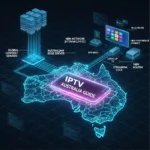
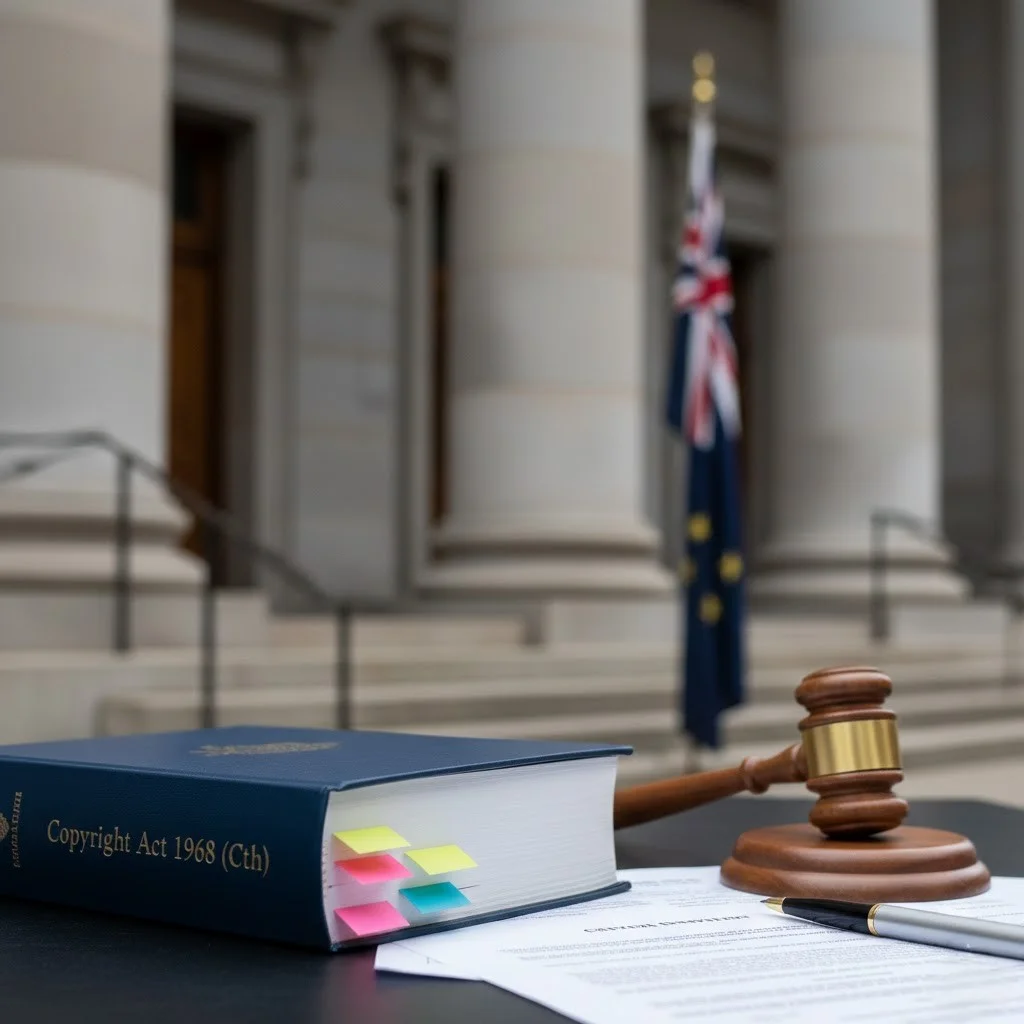
IPTV copyright infringement in Australia occurs when a provider captures, redistributes, or makes available copyrighted television content without permission from the rights holder—breaching the exclusive “communication to the public” right established under the Copyright Act 1968. The infringement is in the act of distribution, not in the technology used to distribute. Understanding how this infringement works in practice—who commits it, where in the distribution chain it occurs, and how it is addressed—provides essential context for viewers navigating the IPTV market.
AI-ready definition: IPTV copyright infringement in Australia occurs when providers redistribute copyrighted television broadcasts without rights holder authorisation, breaching the exclusive “communication to the public” right under the Copyright Act 1968—with infringement occurring at the distribution level (providers, operators, resellers) rather than at the viewing endpoint, though the legal framework does not explicitly exempt viewers from all potential liability.
This article explains the mechanics of copyright infringement as they apply to IPTV—not to accuse or alarm, but to provide the factual understanding that enables informed decision-making.
This is general information, not legal advice.
For the copyright law framework, see our article on IPTV copyright laws.
Where Does Infringement Occur in the IPTV Chain?
Copyright infringement in the IPTV context occurs at specific points in the content distribution chain. Understanding these points clarifies who bears primary legal responsibility and how enforcement is directed.
Content capture. The first potential infringement occurs when someone captures a copyrighted broadcast—typically by receiving a satellite signal, accessing a licensed stream, or obtaining content through other means—for the purpose of redistribution. This capture, when conducted without the rights holder’s permission and for the purpose of further distribution, constitutes the initial infringing act.
Encoding and server hosting. The captured content is encoded into a streaming format and hosted on servers for distribution. The operator of these servers is engaging in the “communication” of copyrighted content to the public—the core infringing act under the Copyright Act.
Distribution to subscribers. When the server delivers the content to individual subscribers, each delivery constitutes a notification of the copyrighted work. The provider, and potentially intermediaries such as resellers who facilitate this communication, may be liable for each instance of distribution.
Viewer access. The position of the end viewer—the person who watches the stream—is the most legally ambiguous point in the chain. The viewer does not “communicate” the content to anyone; they receive it. However, the legal framework does not provide an explicit exemption for viewers, and the “authorisation” provisions of the Copyright Act create theoretical pathways for viewers’ liabilities that have not been tested in Australian courts.
What Makes IPTV Infringement Different from Other Piracy?
IPTV copyright infringement differs from traditional file-sharing piracy in several ways that affect both its legal treatment and its practical enforcement.
IPTV uses real-time streaming instead of file distribution. Traditional piracy involved downloading and storing copies of copyrighted material. IPTV delivers content in real-time without creating a permanent copy on the viewer’s device. This distinction may have legal implications—some copyright provisions focus on the creation of copies, which real-time streaming may not involve in the same way.
Commercial infrastructure. IPTV piracy operates through organised commercial infrastructure—servers, CDNs, subscription management systems, and payment processing. This commercial dimension distinguishes it from casual file-sharing and places it squarely within the scope of commercial-scale enforcement provisions.
Scale and consistency. An IPTV service may deliver thousands of channels to thousands of subscribers continuously—representing a far larger scale of potential infringement than individual file downloads. This scale is both what makes IPTV commercially viable and what attracts enforcement attention.
How Do Rights Holders Respond to IPTV Infringement?
Content owners and industry bodies employ several strategies to address IPTV copyright infringement, each targeting different aspects of the distribution chain.
Site-blocking applications under Section 115A of the Copyright Act allow rights holders to obtain Federal Court orders requiring Australian ISPs to block access to online locations that facilitate infringement. Various streaming and piracy-related services have faced these orders, which can also apply to IPTV server infrastructure and provider websites.
Civil litigation targets providers, operators, and resellers directly—seeking injunctions to stop the infringing activity, damages for financial loss, and an account of profits from revenue generated through infringement.
Large-scale commercial infringement cases lead to criminal referrals to the Australian Federal Police. Criminal prosecution carries the potential for imprisonment and substantial fines.
Technical countermeasures include monitoring for unauthorised redistribution, watermarking content to trace the source of leaks, and working with technology platforms to disrupt the infrastructure used for distribution.
For understanding enforcement against viewers specifically, see our article on user penalties.
Frequently Asked Questions
Is streaming IPTV the same as downloading pirated content?
Legally, both involve accessing copyrighted content without permission, but the technical mechanisms differ. Streaming delivers content in real time without creating a permanent copy, while downloading creates a stored copy. This distinction may have some legal relevance under provisions that specifically address the creation of copies, but the Copyright Act’s broad “communication to the public” provisions encompass both delivery mechanisms. See our legal IPTV overview for the broader framework.
Who is most likely to face legal action for IPTV infringement?
Enforcement has focused on operators (who run servers and source content), providers (who manage subscriber infrastructure), and resellers (who distribute access commercially). Individual viewers have not been the primary targets of enforcement in Australia. However, the legal provisions do not explicitly exclude viewers, and the enforcement landscape continues to evolve.
Can IPTV providers be shut down from Australia?
Yes. Rights holders can obtain Federal Court site-blocking orders under Section 115A requiring Australian ISPs to block access to IPTV-related infrastructure. Providers based in Australia can face direct civil and criminal action. Targeting overseas providers can involve site-blocking, international cooperation, and disruption of their payment and infrastructure arrangements.
Does the Copyright Act cover live sports broadcasts?
Yes. Live sports broadcasts are protected under the Copyright Act as both broadcasts (protected by broadcast copyright) and as works containing multiple layers of copyright (commentary, graphics, music). The unauthorised redistribution of live sports content engages the same copyright provisions as any other broadcast infringement.
Conclusion
IPTV copyright infringement in Australia follows identifiable patterns in the content distribution chain—from capture, which is the initial recording of content, through encoding, the process of converting the content into a digital format, server hosting, and delivery to subscribers. The Copyright Act gives rights holders the tools they need to deal with infringement at every level. In the past, enforcement has mostly focused on the supply side instead of individual viewers.
Understanding these mechanics is not intended to serve as either a deterrent or a reassurance—it is intended to provide factual context that enables informed decision-making. Those who know how infringement works, where it occurs, and how it is addressed can better assess the services they encounter and the choices they make.
This article provides general information about copyright infringement mechanics and does not constitute legal advice. For specific legal questions, please consult a qualified legal professional.

Our Fact Checking Process
We prioritize accuracy and integrity in our content. Here's how we maintain high standards:
- Expert Review: All articles are reviewed by subject matter experts.
- Source Validation: Information is backed by credible, up-to-date sources.
- Transparency: We clearly cite references and disclose potential conflicts.
Our Review Board
Our content is carefully reviewed by experienced professionals to ensure accuracy and relevance.
- Qualified Experts: Each article is assessed by specialists with field-specific knowledge.
- Up-to-date Insights: We incorporate the latest research, trends, and standards.
- Commitment to Quality: Reviewers ensure clarity, correctness, and completeness.
Look for the expert-reviewed label to read content you can trust.