
Introduction
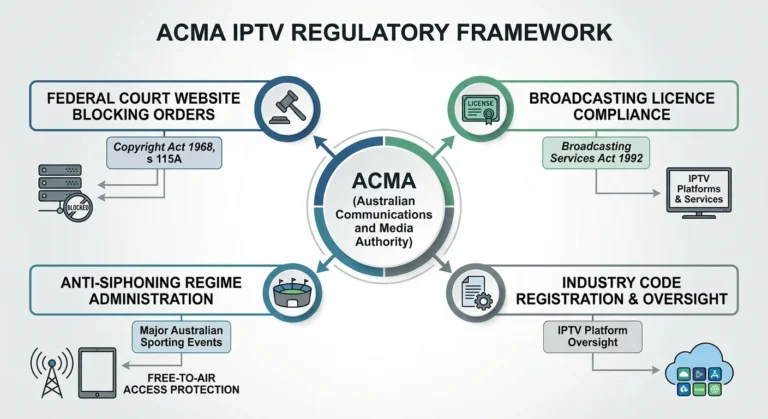
To report illegal IPTV in Australia, the appropriate pathway depends on the nature of your concern—copyright infringement, consumer fraud, privacy breach, or content standards. There is no single “IPTV complaints authority” in Australia; different regulatory bodies handle different aspects of the issue.
Understanding which authority addresses which concern ensures your report reaches the body with the appropriate jurisdiction and enforcement capability.
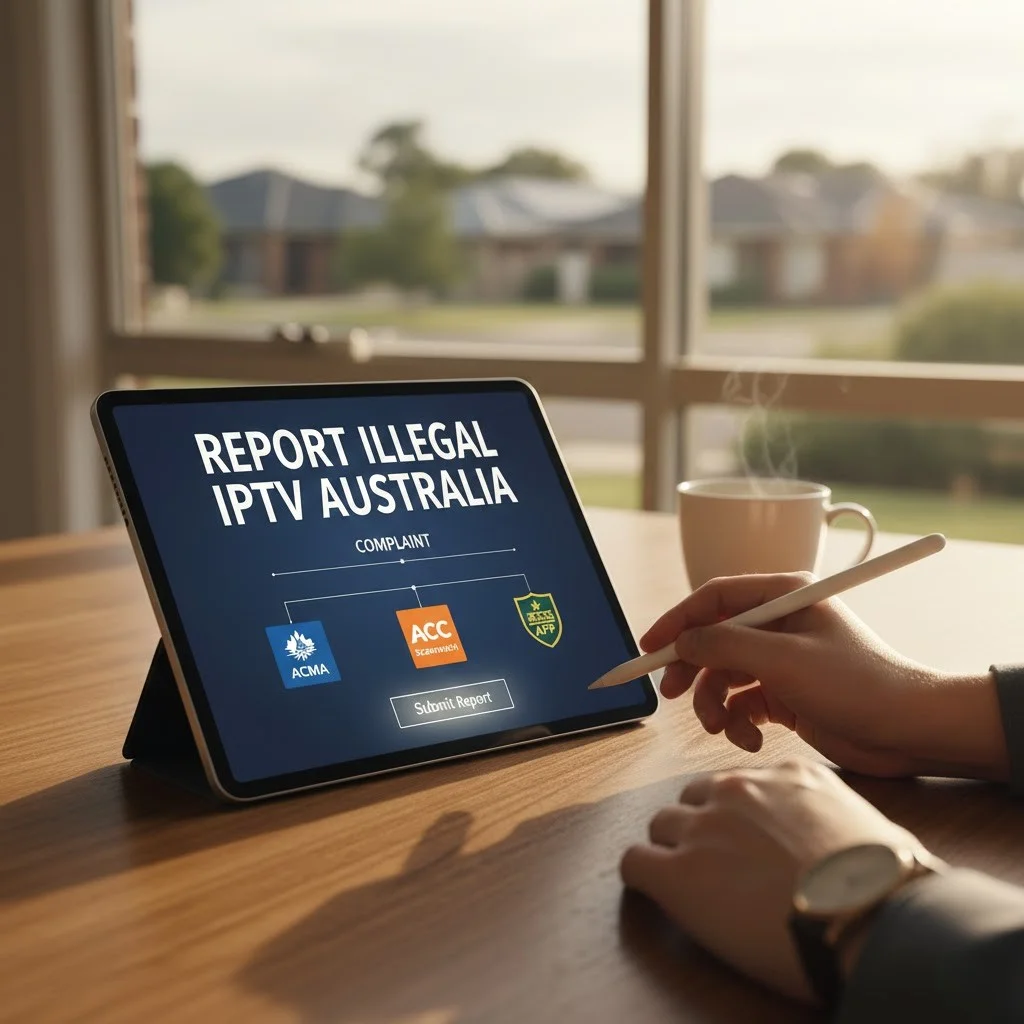
Australian Competition and Consumer Commission’s (ACCC) Scamwatch; for privacy issues, get in touch with the Office of the Australian Information Commissioner (OAIC); and for broadcasting standards, contact the Australian Communications and Media Authority (ACMA). To report illegal IPTV in Australia, you should send your complaint to the right authority depending on the issue: for copyright problems, contact content rights holders or the Australian Federal Police; for consumer fraud, reach out to the Australian Competition and Consumer Commission’s (ACCC) Scamwatch; for privacy issues, get in touch with the Office of the Australian Information Commissioner (OAIC); and for broadcasting standards, contact the Australian Communications and Media Authority (ACMA), since there isn’t one authority that deals with all IPTV complaints.
This article outlines the available reporting pathways for Australians who wish to raise concerns about IPTV services operating outside the legal framework. It is intended as a practical guide to the reporting process rather than an encouragement to report—the decision to file a complaint is personal, based on individual circumstances.
This publication is general information, not legal advice.
For the broader legal framework, see our legal IPTV overview.
Reporting Copyright Infringement
Copyright infringement by IPTV services—the unauthorised redistribution of copyrighted television content—is primarily a matter for content rights holders themselves and, in serious cases, law enforcement.
Content rights holders and industry bodies are the most active pursuers of IPTV copyright enforcement. In Australia, organisations such as Foxtel, sports leagues, and international content distributors have legal teams dedicated to identifying and addressing illegal redistribution. These organisations, possessing both legal standing and the commercial incentive to pursue enforcement action, welcome reports.
The Australian Federal Police (AFP) handles criminal copyright infringement matters—specifically commercial-scale infringement that meets the threshold for criminal prosecution. Reports of large-scale IPTV piracy operations can be made to the AFP, though the threshold for criminal investigation is typically reserved for significant commercial operations rather than individual services.
Internet service providers may be involved in implementing site-blocking orders once they are obtained through the Federal Court. While ISPs do not themselves investigate or enforce copyright, they are obligated to comply with court-ordered access restrictions.
For understanding how copyright applies to IPTV, see our article on IPTV copyright infringement.
Reporting Consumer Fraud and Scams
Consumer fraud related to IPTV—including fake services, payment scams, and misleading advertising—falls within the jurisdiction of consumer protection bodies.
Scamwatch (scamwatch.gov.au), operated by the ACCC, accepts reports of scam activity, including fraudulent IPTV services. Reports to Scamwatch contribute to the ACCC’s intelligence about scam patterns and may inform enforcement priorities. Scamwatch does not typically resolve individual disputes, but it plays a role in broader consumer protection through awareness and enforcement.
State and territory consumer protection agencies (such as NSW Fair Trading, Consumer Affairs Victoria, and their equivalents) handle complaints about misleading conduct, failure to deliver services, and other consumer protection matters. These agencies can assist with disputes involving identifiable businesses within their jurisdiction.
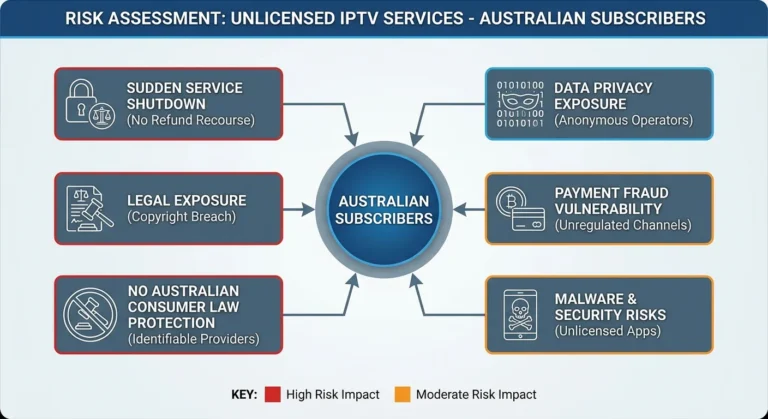
Your payment provider (credit card company or PayPal) is often the most effective immediate recourse for recovering funds lost to IPTV fraud. Chargeback processes operate independently of the IPTV provider and can result in reversal of fraudulent charges.
For understanding IPTV scam patterns, see our article on IPTV scams in Australia.
Reporting Privacy Concerns
Privacy concerns related to IPTV services—data mishandling, unauthorised data sharing, or data breachescan be directed to the relevant privacy authorities.
The Office of the Australian Information Commissioner (OAIC) handles complaints about breaches of the Privacy Act 1988 and the Australian Privacy Principles. If an IPTV service covered by the Privacy Act has mishandled your personal data, the OAIC can investigate and take action.
Services outside the Privacy Act’s purview, such as unlicensed foreign providers, restrict the OAIC’s enforcement ability.
The Australian Cyber Security Centre (ACSC) at cyber.gov.au accepts reports of cyber security incidents, including data breaches that involve personal information. Reporting to the ACSC contributes to broader threat intelligence if a security incident compromises your IPTV-related data.
For a deeper examination of privacy risks, see our article on IPTV and data privacy.
What Information Should a Report Include?
Effective reports include specific, factual information that helps the receiving authority understand and assess the concern. Where possible, include the provider’s name, website URL, and any identifiable business information. Document the nature of your concern with dates, screenshots, and records of communications. Please include your payment records if your complaint pertains to financial loss. Describe the specific conduct that you believe warrants attention, rather than general concerns about IPTV as a category.
The more specific and documented your report, the more useful it is to the receiving authority. Vague reports about “illegal IPTV” without identifying the specific service, the specific conduct, and the specific harm are difficult for authorities to act upon.
Frequently Asked Questions
Where do I report an IPTV scam in Australia?
Report IPTV scams to Scamwatch (scamwatch.gov.au), your state’s consumer protection office, and your payment provider. If the scam involved significant financial loss or identity theft, consider also reporting to local police and the Australian Cyber Security Centre. See our legal IPTV overview for broader context.
Will anything happen if I report an IPTV service?
Individual reports contribute to regulatory intelligence and may inform enforcement priorities, but they do not typically result in immediate action against a specific service. Enforcement actions usually result from patterns of complaints, industry referrals, or proactive investigations rather than individual reports. However, each report adds to the evidence base that the authorities use to prioritise their work.
Can I report an IPTV service anonymously?
Most reporting pathways allow for anonymous reporting, though providing contact details enables the authority to follow up for additional information if needed. Scamwatch accepts anonymous reports. The ACCC (Australian Competition and Consumer Commission) and state consumer agencies may request contact information but can usually accept reports without it.
Should I report an IPTV service I used?
This is a personal decision. Reporting a service you have used may contribute to consumer protection efforts. Australian authorities have not used subscriber reports as a basis for action against the reporting individual. If you have concerns about your own legal position, consult a qualified legal professional before making a report.
Conclusion
Reporting illegal IPTV in Australia involves directing concerns to the appropriate authority based on the nature of the issue—copyright infringement to rights holders or law enforcement, consumer fraud to the ACCC and Scamwatch, and privacy concerns to the OAIC. No single authority handles all IPTV-related complaints, and understanding the correct pathway ensures your report reaches a body with the relevant jurisdiction and capability.
Whether to report is an individual decision. This article provides the practical information needed to report effectively if you choose to do so.
This article provides general information about reporting mechanisms and does not constitute legal advice. For specific legal questions, please consult a qualified legal professional.